
Lorna Fielker, Cabinet Member for Adults, Health & Housing and Depouty Leader of Southampton Council has supported our campaign for Labour to commit to ending Right to Buy. This is a letter to Lisa Nandy.
Dear Lisa,
It was lovely to meet you at the Next Generation session in Manchester earlier this year. Thank you for your inspirational talk and for signing a copy of your book. I am writing regarding the detail which has come out of the document produced by the National Policy Forum regarding the Right to Buy (RTB) which only maintains the current Labour position, There is only a single sentence in the document relating to RTB which says:
“Labour will seek to decrease the number of social homes being rapidly sold off through right to buy without like-for-like new social housing being built to replace them.”
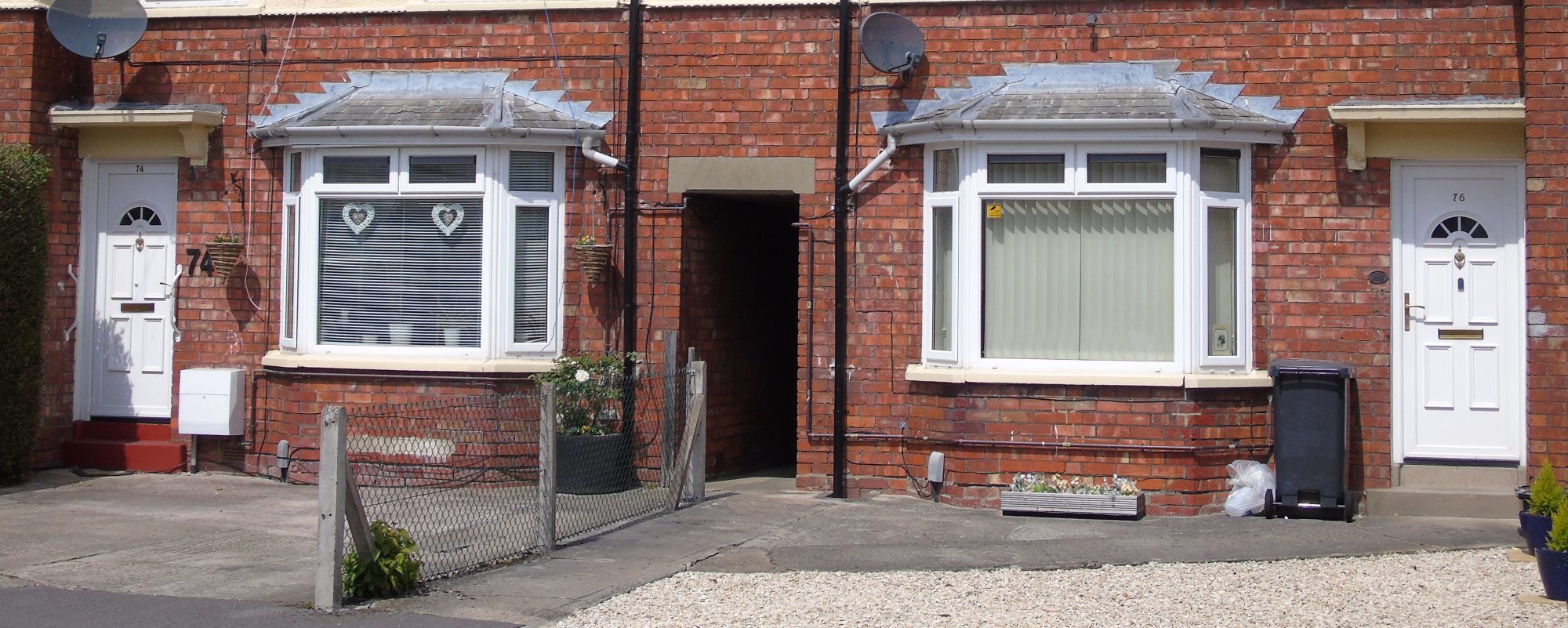
Right to buy as a housing policy has been a disaster for our supply of secure homes for people on lower incomes. Whilst it is right that people should be able to aspire to own their own homes this should not be at the expense of others who will never have that option, and as a result of much of the family housing being sold off, are left languishing on long waiting lists. There are other mechanisms to with which to deliver affordable homes to buy.
The promotion of homeownership by successive governments has focussed on the perceived positive benefits of security of tenure, acquisition of wealth and choice, in relation to the purchase, sale, maintenance and improvements. However there is little reflection to consider if these benefits outweigh the risks of homeownership for low income households when continuing with this policy. Please find below an extract from an essay I have written which considers this question.
I was pleased to hear the announcement this morning regarding compulsory land purchase and do hope as we nearer the general election that we announce more bold housing policies to help meet need.
Lorna
__________________________________________________________
Extract
The ability to move and choice of location and type of property that is often cited as a benefit of homeownership is not as accessible to those who are only able to purchase at the bottom of the market. The level at which the purchaser is able to borrow as well as the additional costs of stamp-duty and removals will impact on the ability to move either into the homeownership market or from one property to another. Those homeowners who purchased their property under the Right to Buy scheme may have been better off remaining as tenants as they would have been eligible for a transfer of housing if their situation dictated that they needed to move. The housing market sorts the population into location by the level of house prices in differing areas. Low-income homeowners are likely to find themselves priced out of the areas with the best access to schools, transport links and other local amenities. This benefit of homeownership is only really available to the better off.
Borrowing
The recent hikes in interest rates will have had a greater impact on low-income homeowners than others, forcing them to seek second (and third) jobs to manage this. The annual increase in rent to tenants of social housing has been far below the hikes seen by homeowners.
It has been found that mortgage lenders may treat income from benefits differently from other forms of income. Homeowners whose previously earned low-income has been replaced by Incapacity Benefit or the Employment & Support Allowance in the long-term may find that this will prevent them from re-mortgaging to raise finance to make any required physical adaptations to their home that their condition may require if they are not eligible to receive public funding. This same issue is also likely to prevent them from obtaining another mortgage to enable them to move to a home more suitable for their needs.
Wealth acquisition
The acquisition of wealth is commonly considered to be a major benefit of homeownership and it is true that the purchase price of property has risen dramatically. However, this increase in is usually dependant on the type of property it is and the area in which it is located. Owners in some area’s which previously had low property values have benefited from the gentrification of urban areas and the rise in popularity of some rural areas as a location for second homes. However, in general low-income working-class homeowners are more likely to own property in less attractive, cheaper housing. Significant value increases are more likely to occur in the more prosperous areas where low-income homeowners are less likely to be able to purchase and therefore do not have equal access to this benefit. Even when house prices have risen the asset value of a home is not always realisable as the sale of the home is usually accompanied by the purchase of another. It is only when the homeowner exits the housing market or downsizes that the asset can be converted into cash to be used for other purposes. This is more likely to be of benefit to prosperous homeowners who were able to purchase reasonably sized homes in prosperous neighbourhoods. The low-income homeowner is less likely to have had the ability to trade up from their first home, to be able to trade down in the future.
Repair & Disrepair
The freedom to improve the property to either increase its value or adapt it to meet lifestyle choices or health needs which is often cited as a benefit of homeownership carries with it the responsibility to pay for the improvements, repairs and maintenance. Low-income households are usually required to obtain mortgages that require a high percentage of their monthly income to service. This leaves them with little income after other living expenses to pay for unforeseen major repairs as well as general maintenance to prevent the property from becoming run down.
The Right to Buy and Right to Acquire schemes gave social tenants the right to purchase their properties at a generous discount, and those former tenants who bought well built homes in popular areas have benefited from the increase in property prices. Owners of leasehold flats have not fared as well. Some have found that the annual service charges and ad hoc charges for major repairs have caused financial hardship.
Loss of income
Low-income households are less likely to have savings to protect them from issues relating to fluctuating incomes and job insecurity. There is a marked difference in the amount of assistance available to renters and homeowners during times of financial difficulty. Tenants who suffer from loss of, or reduced income, either through changes in their employment or relationship breakdown are able to immediately claim housing benefit to help them meet their rent costs. In contrast to this, homeowners who lose their entire household income have to wait 13 weeks from the date that they make their claim for an income replacement benefit before they become entitled to Support for Mortgage Interest payments. These payments only cover interest payments on the mortgage at a government set interest rate. Homeowners who only lose part of their income are not entitled to this benefit, this group often lose any other financial or physical assets that they may own, as they dispose of them to meet their mortgage costs. Renters with less that £16,000 of assets are not required to do this (although those with assets over £6000 will not be entitled to receive a payment that will meet their full rent cost).
The government’s intention is that the market will provide a solution to loss of income for homeowners thorough the purchase of mortgage protection insurance policies. In line with all insurance policies, these come with exclusions as to when an individual can make a claim. Generally, workers not in permanent employment are not eligible. These insurance policies are also unlikely to cover other causes of mortgage arrears such as relationship breakdown and reductions in income. It is also likely that low-income households, who are trying to keep their monthly outgoings down, will either choose a product with less cover than they require, or not take out a policy at all.
Whilst governments have promoted homeownership on one hand, they have withdrawn the support mechanisms, such as full employment policies and tax relief, that reduced the risks with the other. The current job market is based upon the idea of a flexible workforce. This requirement for flexibility comes at the expense of job security. Rather than the now old-fashioned notion of a job for life, the workforce is expected to change jobs regularly and manage periods of unemployment, putting low income homeowners at risk of falling behind with their mortgage payments, this coupled with the limited financial support available, makes home ownership unsustainable for low income individuals whose main source of income comes from the insecure labour market.
During property slumps households facing either a reduction or total loss of income may find it difficult to sell the property, or that the achievable sale price does not cover the outstanding debt. Further issues arise when after the sale, the household find that they need to approach their local authority for help and are considered to be intentionally homeless as they ‘chose’ to sell the property which worsened their housing situation and are therefore not eligible for assistance. With public spending decreasing, local authorities, looking to further limit their duties may also consider if the borrower should have foreseen that they could not repay a mortgage with high monthly repayments in the long term.
Conclusion
Homeownership is commonly considered to be the most secure form of tenure, which gives the household the opportunity to choose where and how they live, increase their personal wealth and provide for their future. However, it is only secure if the household has the financial means to maintain it though changing circumstances and that low-income borrowers are more vulnerable to the risks of homeownership caused by unemployment, reduced income, relationship breakdown, illness and the lack of suitable public or private safety net.
The financial security offered to renters in the form of housing benefit payments when their circumstances change and the landlords’ responsibility for repair and disrepair argue that low-income households, likely to experience fluctuating incomes would have far greater security in the rented sector. Wealth creation is experienced by the better off who have the ability to trade up and down in the housing market and the funds to improve the value of the property. Low-income households are less likely to rise up the ladder in the first place and need to use a higher percentage of their income to maintain their mortgage payments.
 Labour Campaign for Council Housing
One thought on “Right to Buy as a housing policy has been a disaster”