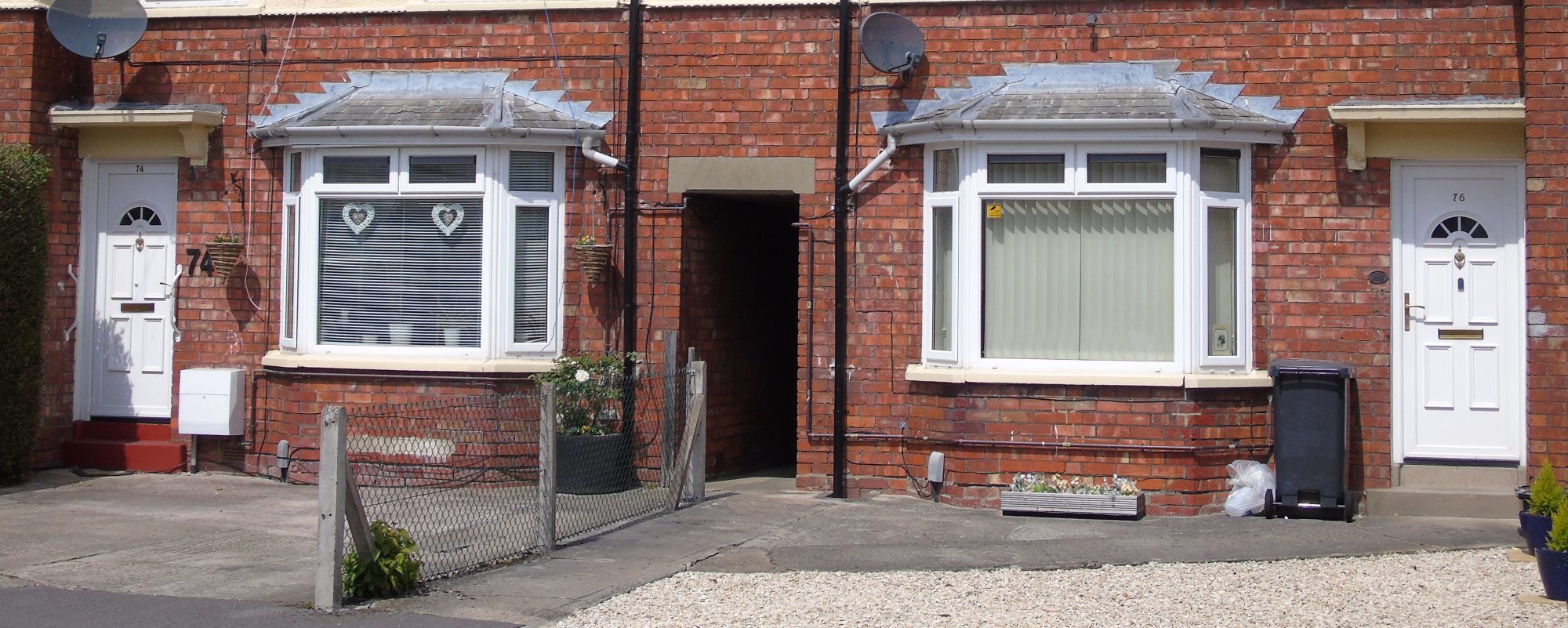
The case for ending Right to Buy is well known. Scotland and Wales ended it with no great resistance. It remains in England where there are less than 1.6 million council homes left and despite some manipulation by councils designed to reduce the numbers on the waiting lists, there are still more than 1.2 million households on the lists. Each RTB sale is one home less for people on the waiting list. The acute shortage of council housing is one of the main reasons why there are over 100,000 households in temporary accommodation, including 131,000 children.
Read on below or download a PDF here:
One of the consequences of RTB which does not receive the attention it deserves is the loss of revenue stream with each home sold. They lose the rental income. Nationally, 10,878 council homes were sold under RTB in 2021/22. The average local authority rent in England in 2021/22 was £89.69. That’s £4,663.88 a year for each home sold. That was a loss of more than £50 million rent that year. Of course, the rent loss is cumulative. Looking at the last 10 years since the ‘enhanced RTB’ (an increased discount) was introduced by the coalition government, councils with council housing stock have lost more than £479 million.1
Councils also lose the income from service charges which some tenants pay, though we don’t have the statistics to put a figure on that.
Table 1: Right to Buy
| Year | Number sold | Average rent | Rent lost | Cumulative loss |
| 2012-13 | 5,947 | £78.61 | £24,309,670.84 | |
| 2013-14 | 11,232 | £82.64 | £48,267,048.96 | £72,576,719.80 |
| 2014-15 | 12,310 | £86.29 | £55,235,954.80 | £127,812,674.60 |
| 2015-16 | 12,254 | £88.16 | £56,176,257.28 | £183,988,931.88 |
| 2016-17 | 13,442 | £87.37 | £61,070,232.08 | £245,059,163.96 |
| 2017-18 | 12,617 | £86.71 | £56,889,043.64 | £301,948,207.60 |
| 2018-19 | 10,911 | £85.85 | £48,708,886.20 | £350,657,093.80 |
| 2019-20 | 10,577 | £85.56 | £47,058,342.24 | £397,715,436.04 |
| 2020-21 | 6,865 | £88.17 | £31,474,926.60 | £429,190,362.64 |
| 2021/22 | 10,878 | £89.69 | £50,733,686.64 | £479,924,049.28 |
This loss of income has consequences for the funding of the remaining council homes. With the impact of inflation, unit costs increase for the shrinking stock. As Table 2 shows, the amount spent on repairs and capital expenditure (renewing key housing components such as bathrooms, kitchens, roofs, central heating etc) has been fairly flat over 10 years. With a decade of inflation the income can cover a lot less work. And building inflation costs are higher than general inflation.
Table 2: Housing Revenue Accounts, England
| Stock Nos | Income £m | Repairs £m | Average spend £ | Capital £m | Average spend £ | |
| 2012/13 | 1,681,785 | £7,854 | £1,720 | £1,022.72 | £428.00 | £254.49 |
| 2013/14 | 1,668,685 | £8,219 | £1,772 | £1,061.91 | £618.00 | £370.35 |
| 2014/15 | 1,643,262 | £8,152 | £1,844 | £1,122.15 | £708.00 | £430.85 |
| 2015/16 | 1,612,329 | £8,369 | £1,794 | £1,112.67 | £707.00 | £438.49 |
| 2016/17 | 1,601,573 | £8,671 | £1,928 | £1,203.81 | £560.00 | £349.65 |
| 2017/18 | 1,592,008 | £8,554 | £1,854 | £1,164.56 | £638.00 | £400.75 |
| 2018/19 | 1,587,161 | £8,866 | £1,932 | £1,217.26 | £755.00 | £475.69 |
| 2019/20 | 1,582,946 | £8,830 | £1,953 | £1,233.77 | £593.00 | £374.61 |
| 2020/21 | 1,581,554 | £8,596 | £1,901 | £1,201,98 | £428.00 | £270.61 |
| 2021/22 | 1,575,709 | £8,621 | £1,877 | £1,191.20 | £801.00 | £508.00 |
The higher expenditure in 2021/22 obviously includes catch-up work from the previous year at the height of the pandemic.
The discount on the price of a council home isn’t covered by the government. The council simply loses a proportion of the market value of the homes it is forced to sell. The tenants pay the price for this discount because there is less revenue to maintain an renew their homes. Over the last 10 years they have lost, on average, 43.7% of the market price they would get if the government didn’t force them to sell at a discount; £6.854 billion.
Insult to injury is then committed by the government because it takes a cut of the sales receipts from councils. We can’t put a figure on what it takes. It varies from council to council, though they can end up with as little as a third of the money they receive. Ostensibly the government’s cut is associated with housing debt. Yet in 2012 when the new ‘self-financing’ system was introduced there was a ‘final settlement’ in which councils were said to be ‘buying themselves out’ of the centralised system. More than £13 billion of extra ‘debt’ was imposed on 136 councils. Servicing this debt costs councils around £1.3 billion a year. For the government to take a portion of sales receipts is daylight robbery, making it financially impossible to build replacement homes with RTB receipts.
Right to Buy receipts, England
| Year | Selling price | Discount | Price without discount |
| 2021/22 | £1,061,640,000 | £743,435,000 | £1,805,075,000 |
| 2020/21 | £723,019,000 | £554,082,000 | £1,277,101,000 |
| 2019/20 | £905,426,000 | £677,277,000 | £1,582,703,000 |
| 2018/19 | £949,414,000 | £700,838,000 | £1,650,252,000 |
| 2017/18 | £1,069,998,000 | £776,610,000 | £1,846,608,000 |
| 2016/17 | £1,103,108,000 | £829,701,000 | £1,932,809,000 |
| 2015/16 | £963,119,000 | £789,211,000 | £1,752,330,000 |
| 2014/15 | £931,464,000 | £796,146,000 | £1,727,610,000 |
| 2013/14 | £774,957,000 | £679,028,000 | £1,453,985,000 |
| 2012/13 | £337,708,000 | £307,687,000 | £645,395,000 |
| Total | £8,819,853,000 | £6,854,015,000 | £15,673,868,000 |
As the New Economics Foundation has said:
“…right to buy actually disincentivises the building of new social homes. Why would councils pay to build homes, only to sell them at a discount, lose income from future rental payments and not receive the full sale receipt?”
The answer, of course, is that the government forces them to. They are robbed in three ways. Existing tenants pay the price with a worse service that they would receive if RTB did not operate, people on the waiting list wait longer than they would have to and more people are forced into temporary accommodation because of the shortage of council housing resulting from RTB.
1This is an estimate. Houses are sold at varying times through the year, so the rent lost the first year after the sale will vary because of the rent increase which is introduced in April of each year.
 Labour Campaign for Council Housing