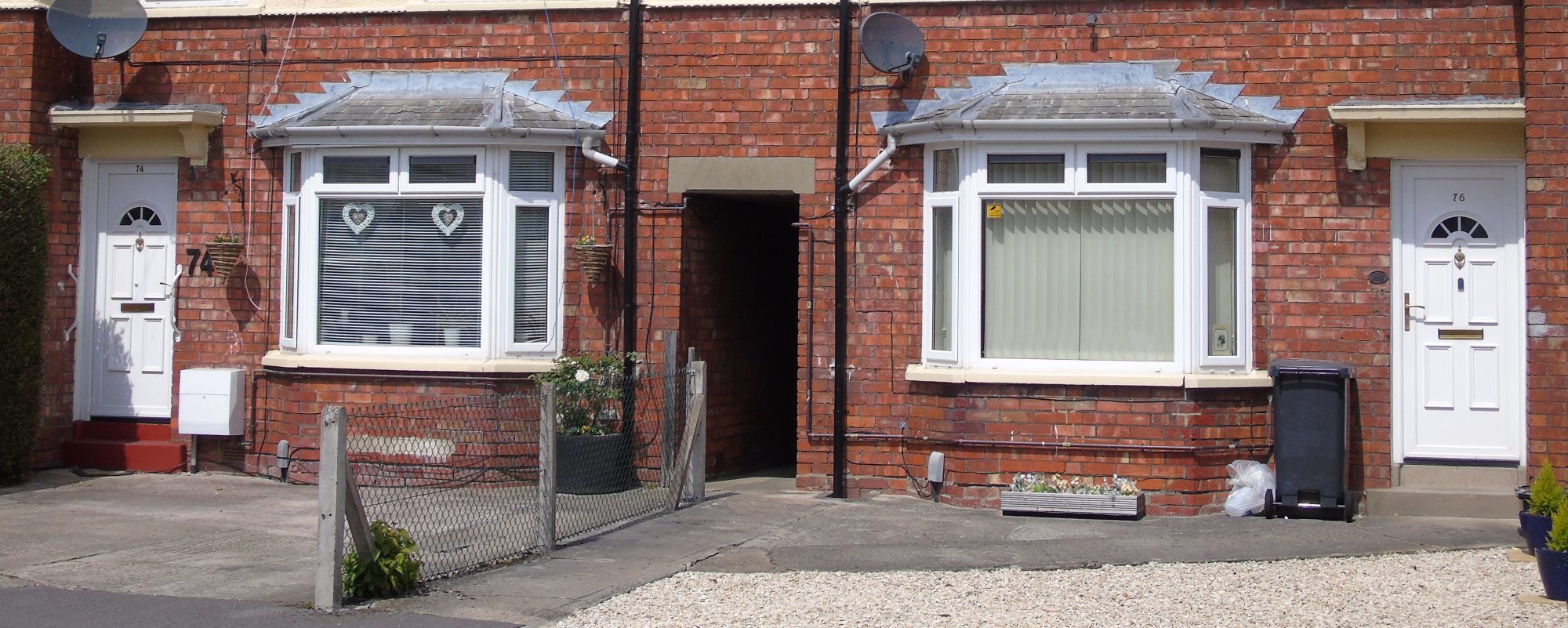
Lisa Nandy recently said that “telling working class people they can’t own their own home is just unacceptable”. If she means their council home that rather contradicts what she said at last September’s Labour conference; that “the idea of a home for life handed on in common ownership to future generations is an idea worth fighting for.” If a council home is sold to the tenant then it ceases to be “in common ownership”. It is privatised. It ceases to be available to other households on the waiting list.
The great benefit of a council tenancy, as opposed to the private rented sector, or even a housing association home, is that you have a “secure tenancy”. It’s not automatically “a home for life”. If you don’t behave in a civilised fashion or you don’t pay your rent then you can lose the tenancy. However, it can be a home for life, and the security that tenants have means that it is their home, and most tenants treat it as such, even though they don’t own it.
If Lisa means owning a home bought on the market, then nobody opposes home ownership. She is setting up a straw-man to knock down. If tenants want to buy on the market that’s up to them. But it shouldn’t be a council home. Whilst buying one on the cheap obviously benefits the individual tenant, it has dire social consequences, as the rising number of households on the waiting list and in temporary accommodation show. Moreover, an estimated 40% of ex-council homes end up in the exploitative private rental market.
Lisa Nandy has spoken about “like for like” replacement of homes sold but we have yet to have an explanation of how this would be accomplished. Talk to councillors responsible for housing and they will look in disbelief at how this is supposed to be achieved. The LGA has long asked for councils to be able to keep 100% of receipts. Yet in a Sunday Times interview with Lisa we read that the Labour leadership is considering giving receipts to (as yet non-existent) development corporations rather than allowing councils to keep them all. Why propose this if you want councils to build more council housing? The continuation of RTB is a drag on new building because councils don’t want to spend time and money building new stock only to lose it through RTB.
With sales reaching nearly 11,000 last year, and demolitions needing to be taken into account as well, councils would have to build 13,000 or more each year just to stop the loss of stock. It’s true that if the discount was reduced then less would be sold. Sales declined when John Prescott cut the discount. But doing the same will not stop the Tories attacking Labour. We have been told by senior figures that they are concerned that if they commit to ending RTB the Tories will accuse them of “opposing aspiration”. Yet, cut the discount and the Tories will surely say that Labour is making it more difficult for tenants to become home owners.
It is not difficult to tackle the argument head on, explaining that RTB has been disastrous; a key driver of the housing crisis. A council loses threefold. It has one less property for those on the growing waiting lists. It loses the rental income. By our reckoning, over the last 10 years alone English councils have lost roughly £480 million in rental income. As their losses stack up, year on year, especially when inflation is on the rise, then unit costs of maintaining and renewing the falling number of existing properties increase.
On average councils lose 41% of the value of properties sold under RTB. The discount is lost by councils. The government does not compensate them. Over the last 10 years the discounts add up to nearly £6.9 billion lost by councils. They do no even keep what the tenant pays for buying the property. The government takes a cut which is supposed to be associated with historic debt. This is despite the fact that in 2012 when a new financial system was introduced, there was a “final debt settlement” which was said to enable councils to “buy themselves out” of the centralised system. 136 councils were given more than £13 billion bogus debt which they are still servicing, to the extent of around £1.3 billion a year. The government is, therefore, in taking its ‘cut’, stealing tenants rent (93% of income is tenants’ rent and service charges), which can’t be spent on the upkeep of homes.
Historically, council housing facilitated home ownership insofar as the reasonable rents enabled tenants to save up for a deposit for a market home, hand the keys back to the council, and the property was handed onto a household on the waiting list. It could facilitate that again if building/buying was on a large scale once again. However, it’s also necessary to say that there is nothing superior about owning a home rather than renting. Keir Starmer is wrong when he says that home ownership “is the bedrock of security and aspiration”. As mortgagees who have to renew their mortgages are now finding, to their cost, increasing interest rates can drive you to the financial edge. A mortgage can become the proverbial albatross around the neck.
For all the talk of house prices coming down the fact is that high ratios of earnings to house prices mean that large numbers of people cannot afford a mortgage. It makes more sense to focus on building/buying council homes to liberate people from the private rented sector, especially a younger generation forced into precarious and low paid work, some saddled with student debt, paying extortionate private rents.
Right to Buy was consciously designed to mobilise self interest in order to undermine the electoral base of support of Labour on council estates. “Aspiration”, in this context, is simply a version of “getting on” or “keeping up with the Jones’s”; a financial benefit for the individual but with negative social consequences for others.
Nobody is telling working class people they can’t own a home. We would contend that it is unacceptable to force people into the market because of the shortage of council housing. The secure tenancy of a council home has much to recommend it. Would that the dream of a council tenancy could become a reality for many more people than currently stand a chance. Not wanting to own a home, or not being able to afford one, is not an expression of lack of aspiration. The reality of the lives of too many people today is that their aspirations are to be able to pay the rent without a struggle, to feed their children and themselves, to be able to turn the heating on when it’s cold, and to live in a home which is not a threat to their health. That’s why building social rent homes should be the first priority.
The irony is that with Rachel Reeves indicating that as Chancellor she will be parsimonious, ending RTB would be a cost-free policy. It would mean that however many homes were built/bought, councils would increase their housing stock for the first time since 1980. It’s high time for England to follow Scotland and Wales in ending the privatisation of collectively owned housing.
Martin Wicks
August 14th 2023
 Labour Campaign for Council Housing