From Food & Solidarity, Newcastle
When water leaked from the flat above Abdul’s home, his bathroom ceiling collapsed. He was left with extensive damp, black mould, and an unsafe living environment. Abdul is a long-term resident in the over-55 block Breamish House. His daughter and neighbours repeatedly reported the problem to Newcastle City Council. Although council staff visited and took photographs, no immediate action followed. The council proposed repairs for late November, leaving an elderly tenant in dangerous conditions for months. When Food & Solidarity door-knocked the flats we uncovered numerous flats with serious damp issues.
This situation was not an isolated maintenance problem but a clear case of neglect.
Neighbours organising, step by step
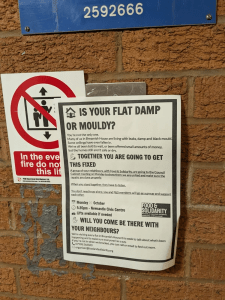
Food & Solidarity organisers worked with Abdul to pursue a collective response. They planned a door-to-door visit across Breamish House to find other residents affected by leaks, damp, or mould. Volunteers worked in pairs. One peron spoke with residents while the other recorded details and sign-ups. The aim was to gather evidence, collect names for a joint letter, and identify neighbours willing to attend a meeting with the council.
The action was timed to coincide with a council cabinet meeting on 20 October and with the introduction of Awaab’s Law on 27 October. Residents signed a letter demanding urgent repairs, temporary rehousing where required, and a full inspection of damp problems across the block.
What happened at the cabinet meeting?
Residents delivered their letter in person. Within 24 hours, the council sent workers to Abdul’s flat and began repairs while he remained in his home. Months of unanswered reports were addressed only after residents acted together. At the meeting, a councillor presented a quarterly repairs report stating that repairs were being completed in a timely way. Residents present disagreed with that account. The contrast suggested a wider problem in how the council records and responds to housing complaints.
What this case shows
Damp and mould are health and safety issues. They pose real risks, especially for older residents.
- Individual reports are often ignored. Abdul’s case moved forward only after public collective pressure.
- Collective action works. Coordinated door-to-door conversations, a clear letter, and a public meeting produced faster results.
- The problem is wider. Other tenants reported long-term damp and mould, and some paid privately for treatment because of council delays.
Featured in the (Newcastle) Chronicle
The Chronicle published a feature on the living conditions at Breamish House, showing images of damp and black mould and reporting that Newcastle City Council described the conditions as “unacceptable”. The article noted that emergency repairs were carried out at three flats after residents confronted the council at a cabinet meeting and that a full inspection of the building is under way. Read the full Chronicle piece here: Inside the ‘uninhabitable’ Newcastle council flats plagued by disgusting damp and mould.
Quotes from Food & Solidarity
“At the council cabinet meeting, a councillor shared a quarterly update on repairs to homes, noting the council’s success in ensuring they are undertaken in a timely manner. Sitting alongside members and residents who have been struggling for years to get repairs, we were shocked to hear this. When Food $ Solidarity spoke to individual members of the council, they were likewise shocked by the conditions of our members’ homes. None of the information we shared was new. Clearly there is a systemic issue which means that, while residents have a voice repairs are not being mad.”
Elgan John, Food & Solidarity organiser
“The evidence from Breamish House suggests the council is not taking damp and disrepair seriously at all.”
Lorna Roden, Food & Solidarity organiser
A Newcastle City Council spokesperson said:
“Following our recent meeting, emergency repairs were carried out to the three properties within Breamish House within 24 hours. One resident was temporarily moved into alternative accommodation whilst we completed the necessary works. We have identified the root cause of the issues which we have either been able to resolve or if needed, follow on work will be completed within the next couple of weeks. We are now undertaking a full inspection of Breamish House to identify and address any further urgent repairs needed.”
Key takeaways for other communities
Map the problem: record evidence, dates, and photographs. Use door-knocking to find neighbours affected by the same issue. Choose the right moment for public action, such as council meetings or key legislative dates. Turn practical needs into collective demands that are visible and achievable.
When residents act together, neglected repairs become impossible to ignore.
 Labour Campaign for Council Housing