This is an extract from a Public and Commercial Services Union pamphlet, “Social Security – there is an alternative”.Also of interest, the PCS is undertaking a suvey of its membership in relation to their housing situation and how the crisis impacts on them.
Since 1997 the price of an average home in England has doubled relative to wages from 3.5 times the average annual wage to 7.71 times average pay. House prices relative to wages have more than doubled in the space of a quarter of a century. There have been similar increases in other UK nations too.
That is good news for housing corporations, private landlords and banks. But it’s bad news for mortgage holders, renters and the wider economy too.
As housing becomes more expensive, it means we are paying more of our wages in rent or on a mortgage. That means we have less to spend in the rest of the economy: in local shops, or on going to the pub or for a meal out in a restaurant.
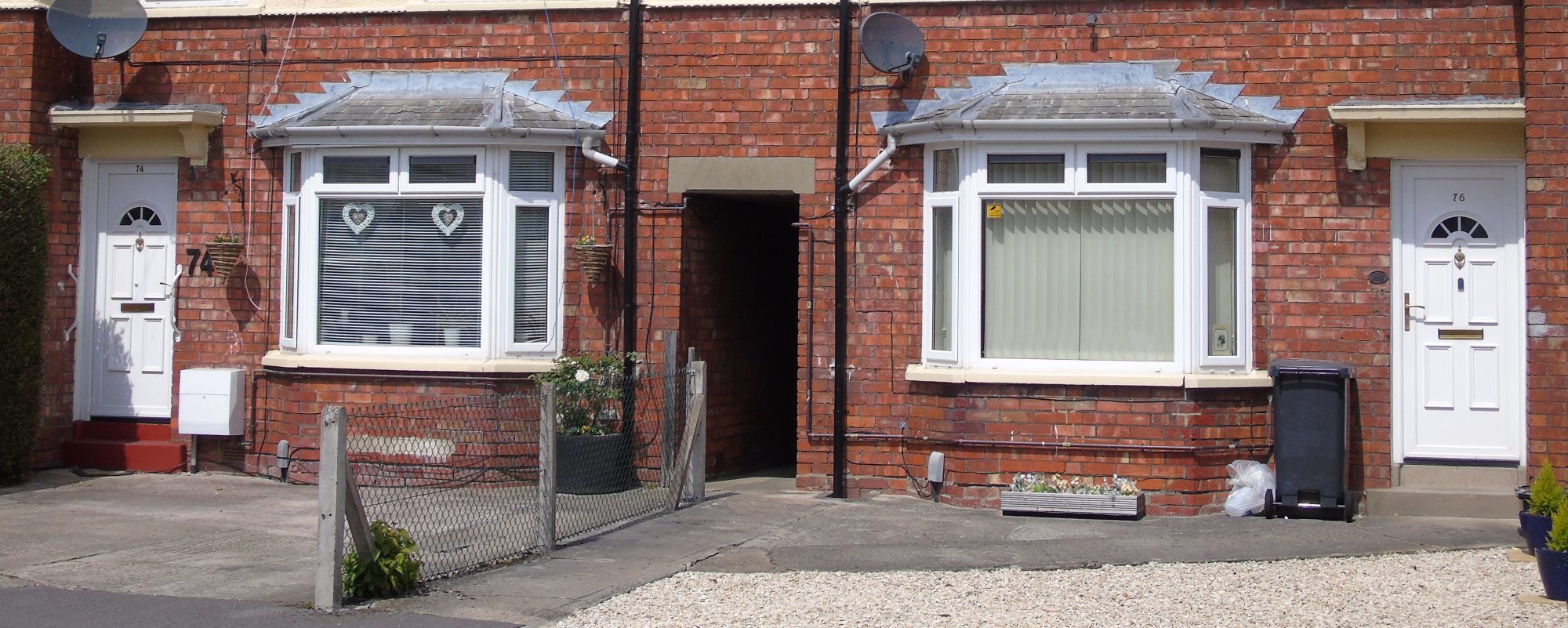
Council housing was a bedrock of housing policy in this country for nearly sixty years, but that changed in 1979 with the election of a Conservative government that introduced the Right to Buy and stopped building council housing.
Research by the Common Wealth think-tank shows the immense cost of Right to Buy to us all. The policy represents two big blows to council balance sheets: the discount giveaway itself, and the forgone appreciation of the assets had they not been sold. Together these add up to £326 billion11.
In the late 1970s nearly one-third of Britons lived in council housing – with a secure tenancy and a regulated (and by today’s standards, cheap) rent. It gave security to millions of families in work and out of work, old and young. The post-war Labour government of 1945 had a vision of council housing as “the living tapestry of a mixed community”, as Health and Housing Minister Aneurin Bevan said. Today that vision lies in ruins.
Thirty years ago, in the 1990s under John Major we were building 10 times as many council homes a year as we were under the last Conservative government. Housebuilding has been privatised; it is built and sold to meet developers’ need for profits, not social need for community, shelter and security.
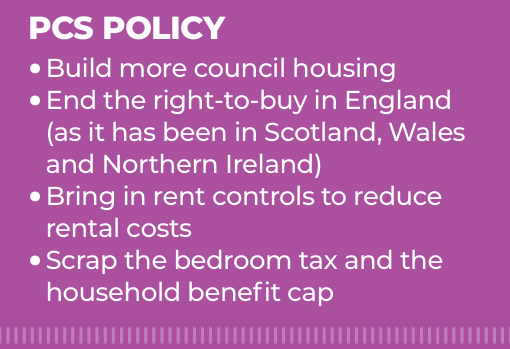
In Scotland, Wales and Northern Ireland the Right to-Buy policy has been ditched in recent years, and the UK Labour government has cut subsidies for the scheme in England.
In 2025 there were more families than ever that were homeless – living in temporary accommodation without a home to call their own. Often these families are existing in squalid, overcrowded accommodation, from bedsits to B&Bs to converted shipping containers.
The housing crisis is starkest in London. Calculated before housing costs, London has fewer people living in poverty than the UK average, but after housing costs London is not just the capital, it is the poverty capital of the UK with 26% of Londoners living in poverty, 2.3 million people12. The average house price in London is now over £500,000, compared to £270,000 in England as a whole.
Council house building Instead of building council housing and controlling rents, governments have cut the rates of housing benefit for people. This has led to the social cleansing of many parts of UK cities as working class people are priced out. The lack of council housing has meant a rise in the costs of housing benefit to over £25 billion a year – much of it going to private landlords charging much higher rents, and helping to subsidise the expansion of their property portfolios. Building council housing would save billions on housing benefit payments.
Not only have housing benefit rates been cut, the previous Conservative government introduced the bedroom tax and the household benefit cap to further restrict access to decent homes to working class people in or out of work.

